Home › First aid guides › Using Capsaicin Cream for Arthritis and Muscle Pain
First aid guide
Using Capsaicin Cream for Arthritis and Muscle Pain
What capsaicin is, how a chili-pepper compound ends up in an arthritis cream, what to expect in the first week, how it compares to a cooling menthol muscle rub, and how to use it safely.
This is general information, not medical advice. Always read and follow the Drug Facts label on the product you use, and ask a doctor or pharmacist about your situation.
Capsaicin is the compound that makes chili peppers hot. In a very small concentration, it is also the active ingredient in over-the-counter topical creams labeled for the temporary relief of minor aches and pains of muscles and joints associated with arthritis, backache, strains, sprains, and bruises. It has a long track record, it does not smell like a locker room, and it works differently from every other pain cream on the shelf — which is why it deserves its own explanation.
How capsaicin cream works
Nerve endings in the skin use a chemical messenger, often called substance P, to send pain signals. Capsaicin stimulates those nerve endings; that is the warming sensation people notice at first. With repeated application over days, the nerve endings become less responsive, and the local pain signal quiets. In plain terms: capsaicin does not numb or cool the area, and it does not reduce swelling the way an oral anti-inflammatory does. It gradually turns down the volume on the pain signal itself.
Two practical consequences follow:
- It is a routine, not a rescue. Most labels direct application three to four times daily, and the effect builds over the first one to two weeks of consistent use. Applying it once when a knee aches will not show what it can do.
- The warmth is expected. A mild warming, tingling, or burning sensation where the cream is applied is normal, especially in the first days. It usually fades as the nerves adapt. Intense burning, blistering, or skin damage is not normal; stop use and ask a doctor.
What the label covers
Over-the-counter capsaicin 0.025% creams are labeled for the temporary relief of minor aches and pains of muscles and joints associated with simple backache, arthritis, strains, bruises, and sprains. That makes it a fit for the persistent, day-to-day discomfort of an arthritic hand, knee, or lower back, where a steady routine is realistic.
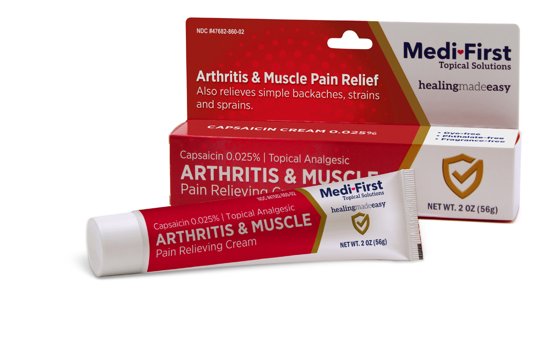
Medi-First® Arthritis & Muscle Pain Relieving Cream contains capsaicin 0.025% and is unscented and odorless, which matters more than it sounds. Many pain creams announce themselves to everyone in the room. An unscented capsaicin cream can be used at the office, before a meeting, or at night without perfuming the sheets. It is phthalate-free, paraben-free, and dye-free, and comes in a 2 oz tube.
Using capsaicin cream safely
The precautions on the Drug Facts label are worth reading in full. The most important ones:
- Wash your hands thoroughly with soap and water immediately after applying, unless you are treating the hands. Capsaicin on the fingers finds its way to eyes, nose, and mouth, and that is a miserable half hour.
- Keep it away from eyes and mucous membranes. If it gets in the eyes, flush with water. Do not rub.
- Apply to intact skin only. Not on wounds, damaged, or irritated skin, and not on a fresh sunburn.
- Do not bandage tightly and do not apply heat over the treated area. A heating pad over capsaicin cream can cause a burn.
- Give it time before bathing. Hot water shortly after application can intensify the burning sensation.
- The label is for adults and children 18 years of age and older; for children under 18, ask a doctor. If you are pregnant or breast-feeding, ask a health professional before use.
- Stop use and ask a doctor if the condition worsens, symptoms persist for more than seven days, or symptoms clear up and come back within a few days.
Capsaicin vs. a cooling muscle rub
The other classic in this category is a menthol and methyl salicylate cream, often called a muscle rub. Those creams are typically labeled for the temporary relief of minor aches and pains of muscles and joints associated with backache, arthritis, strains, bruises, and sprains — the same list — but they get there differently.
- Menthol creates a cooling sensation that distracts from and overrides the pain signal; the relief is quick and noticeable.
- Methyl salicylate is a counterirritant related to aspirin that produces warmth and is widely used for sore muscles.
A useful way to think about the two:
- A cooling muscle rub suits a post-workout ache, a strained back from yard work, or a sore shoulder — situations where you want fast, cooling relief from something that will resolve in days.
- Reach for capsaicin for the ongoing ache of arthritis or a chronic trouble spot, where a consistent daily routine and an odorless cream fit the way you live.
Some people use both, on different areas or at different times, but not layered on the same spot. Methyl salicylate has its own label warnings: it is a salicylate, so anyone allergic to aspirin, or taking blood thinners, should ask a doctor before use, and it should never be used with a heating pad. Read the Drug Facts panel on either product before starting.
What to expect week by week
- Days 1 to 3. Warming or tingling with each application, sometimes noticeable, and little change in pain. Keep going.
- Days 4 to 7. The warmth is milder. Some people begin to notice easier mornings or a longer stretch before the ache returns.
- Week 2 and on. For many, this is when the benefit becomes clear. If there is no improvement after the label's time limit, stop and talk to a doctor.
When to see a doctor instead
Topical pain relievers are for minor aches and pains. See a doctor for:
- Joint pain with significant swelling, redness, or warmth, or a joint you cannot bear weight on.
- Pain after a fall or injury where a fracture is possible.
- Back pain with numbness, tingling, weakness in the legs, or changes in bladder or bowel control.
- Pain that wakes you at night, comes with fever or unexplained weight loss, or steadily worsens.
- Arthritis that limits daily activities. There are treatment options beyond creams, and a doctor can help you find the right combination.
This is general information, not medical advice. Read and follow the Drug Facts label on any product you use, and ask a doctor or pharmacist about persistent pain.
Products mentioned