Home › First aid guides › Zinc Oxide Ointment: Diaper Rash, Chafing, and Poison Ivy
First aid guide
Zinc Oxide Ointment: Diaper Rash, Chafing, and Poison Ivy
Why a plain white ointment has stayed in medicine cabinets for a century. What zinc oxide 20% is labeled for, how to use it for diaper rash, chafing, and weeping poison ivy, and why the 16 oz jar earns its shelf space.
This is general information, not medical advice. Always read and follow the Drug Facts label on the product you use, and ask a doctor or pharmacist about your situation.
Zinc oxide ointment is not glamorous. It is thick, white, and has been sold in essentially the same form for longer than anyone reading this has been alive. It is also one of the most useful things in a house with babies, runners, gardeners, or anyone who has ever spent a summer weekend near poison ivy. This guide covers what a zinc oxide 20% skin protectant is labeled to do and how to get the most out of it.
What zinc oxide actually does
Zinc oxide is a mineral. In an ointment, it does one job extremely well: it forms a physical barrier on the skin. That barrier keeps wetness out, keeps irritants away from the skin underneath, and gives irritated skin a protected, undisturbed environment to recover in. It does not contain a steroid, an antibiotic, or a fragrance. It simply sits on the skin and protects it.
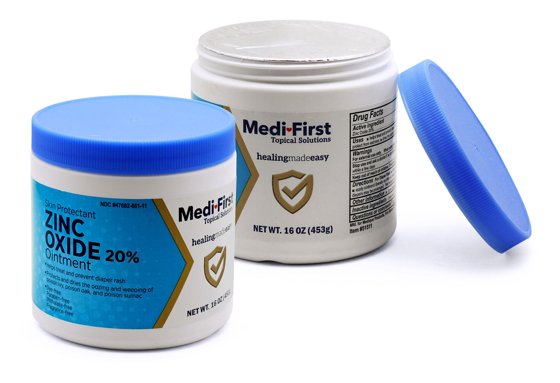
The Medi-First® label lists these uses:
- Helps treat and prevent diaper rash.
- Protects chafed skin or minor skin irritation due to diaper rash and helps protect from wetness.
- Dries the oozing and weeping of poison ivy, oak, and sumac.
Medi-First® Zinc Oxide 20% Ointment is a gentle, dye-free, paraben-free, phthalate-free, fragrance-free formula in a 16 oz jar.
Diaper rash: treat and prevent
Diaper rash is, at its core, skin that has been wet for too long, rubbed by a diaper, and exposed to urine and stool. The fix is to keep it dry and protected while it heals.
Treating a rash
- Change the diaper as soon as it is wet or soiled. This is the single biggest factor.
- Clean the area gently with warm water and a soft cloth, or fragrance-free wipes. Pat dry; do not rub.
- Let the skin air-dry for a few minutes if you can.
- Apply zinc oxide ointment liberally, as the label directs, at each diaper change, and especially before bedtime or any time exposure to wet diapers may be prolonged.
- Fasten the diaper loosely enough for air to circulate.
Preventing a rash
A thin layer of zinc oxide at each change, particularly overnight, keeps a barrier between skin and moisture. Many parents use it routinely once a baby has had one bad rash.
When to call the pediatrician
- The rash does not improve within about seven days of home care, or gets worse.
- There are blisters, pus-filled bumps, open sores, or bleeding.
- The rash is bright red with small red spots spreading out from the edges, which can suggest a yeast infection that needs a different treatment.
- The baby has a fever or seems unusually uncomfortable.
Chafing and minor skin irritation
The same barrier that protects a baby is why zinc oxide ointments have long been used by runners, hikers, and anyone whose skin rubs against skin or fabric. Inner thighs on a long run, the strip under a backpack strap, a waistband, skin folds in hot weather — all get raw for the same reason a diaper area does: moisture plus friction. A barrier that keeps wetness off the skin and reduces rubbing addresses both. Wash and dry the skin first, apply a thin layer, and reapply as needed. It is thick and white, so it stays where you put it rather than migrating into clothing. The Medi-First label's stated uses are diaper rash and poison ivy, oak, and sumac; read it before use.
Poison ivy, oak, and sumac: drying the weeping stage
A poison ivy rash goes through stages. Early on, it is red and itchy. Then blisters form, break, and weep clear fluid. That weeping stage is uncomfortable, messy, and where zinc oxide's "protects and dries" use comes in. The ointment shields the raw skin from clothing and helps dry the oozing.
A few points that matter:
- The fluid from poison ivy blisters does not spread the rash. The rash spreads only from urushiol, the plant oil, so washing skin, clothes, tools, and pets that touched the plant is what prevents new patches.
- Zinc oxide handles the weeping and protection. For the itch itself, an anti-itch cream with hydrocortisone or diphenhydramine is labeled for poison ivy (see the anti-itch guide). Use them on different areas or at different times rather than layered.
- See a doctor for a rash on the face or genitals, a rash covering a large part of the body, severe swelling, difficulty breathing, or signs of infection.
Why the 16 oz jar
Tubes of zinc oxide run out at the worst possible moment: mid-rash, mid-race season, mid-weekend. A 16 oz jar lasts a household a long time, costs less per ounce, and stays put on the changing table or in the bathroom. Because the ointment is thick and does not spoil quickly, a large jar does not go to waste. Keep the lid closed, store it at room temperature, and use a clean finger or spatula to scoop, especially when treating a diaper area, to keep the jar clean.
A few things zinc oxide is not for
- It is not a sunscreen at this strength or in this form, even though zinc oxide is used in some sunscreens. Use a product labeled as a sunscreen.
- It is not labeled to treat infection. A rash with pus, an open wound, or a bite that is infected needs a different product or a doctor.
- It is for external use only. Keep it away from the eyes, and follow the label's directions on when to stop and ask a doctor, such as if the condition worsens or does not improve within seven days.
The short version
Zinc oxide 20% ointment protects skin from wetness and friction and helps dry weeping poison ivy. It belongs on the changing table, in the gym bag, in the gardening kit, and in the home first aid box. It has earned its century.
This is general information, not medical advice. Read and follow the Drug Facts label on the product you use. For a baby's rash that does not improve, call your pediatrician.
Products mentioned