
Home › First aid guides › Hydrocortisone or Diphenhydramine: Which Anti-Itch Cream When?
First aid guide
Hydrocortisone or Diphenhydramine: Which Anti-Itch Cream When?
Two anti-itch creams, two different jobs. How hydrocortisone 1% and extra strength diphenhydramine creams work, what their labels cover, and which to reach for when it is bug bites, poison ivy, rashes, and everyday skin irritation.
This is general information, not medical advice. Always read and follow the Drug Facts label on the product you use, and ask a doctor or pharmacist about your situation.
The anti-itch section of any pharmacy has two workhorses: hydrocortisone cream and diphenhydramine cream. They sit side by side, they both promise itch relief, and people tend to grab whichever tube is closest. They are not interchangeable. Knowing what each one does makes the 2 a.m. mosquito bite or the poison ivy weekend a little easier.
Hydrocortisone 1%: calms inflammation
Hydrocortisone is a mild topical corticosteroid. At the 1% strength sold over the counter, its Drug Facts label covers the temporary relief of itching associated with minor skin irritations, inflammation, and rashes due to eczema, psoriasis, poison ivy, oak, and sumac, insect bites, detergents, jewelry, seborrheic dermatitis, and soaps. The common thread is inflammation: red, swollen, irritated skin that itches because it is inflamed.
Because it works on the inflammation itself, hydrocortisone is the usual pick when the skin looks angry, not just itchy. A rash from a new piece of jewelry or a new detergent, a flare of eczema, the red halo around a cluster of bites — that is hydrocortisone territory.
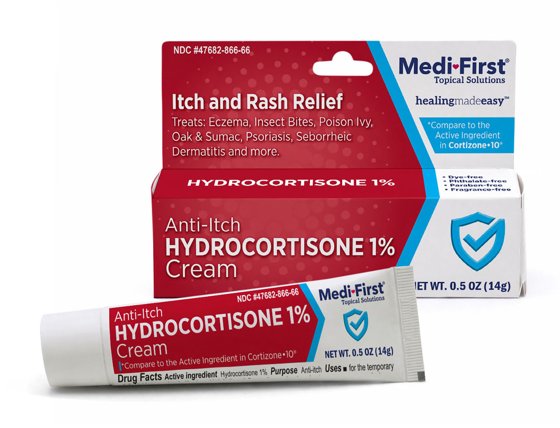
Hydrocortisone 1% is the active ingredient in Cortizone•10®. Medi-First® Hydrocortisone 1% Anti-Itch Cream matches that active and is dye-free, phthalate-free, paraben-free, and fragrance-free, in 0.5 oz and 1 oz tubes.
The label directions are typically to apply to the affected area not more than three to four times daily. The label is for adults and children 2 years of age and older; for children under 2, do not use and consult a doctor. Stop use and ask a doctor if the condition worsens, symptoms persist for more than seven days, or clear up and come back within a few days, and do not begin use of any other hydrocortisone product unless you have consulted a doctor.
Extra strength diphenhydramine cream: numbs the itch and the sting
Diphenhydramine is an antihistamine, the same molecule as oral Benadryl®. Applied to the skin, it works as a topical analgesic: it temporarily relieves both the itching and the pain of the skin's surface. Extra strength anti-itch creams pair diphenhydramine HCl 2% with zinc acetate 0.1%, a skin protectant that helps dry the oozing and weeping of poison ivy, oak, and sumac.
The Drug Facts label for this combination covers the temporary relief of pain and itching associated with insect bites, minor burns, sunburn, minor skin irritations, minor cuts and scrapes, and rashes due to poison ivy, oak, and sumac. Note the word pain. When a bite or a sting hurts as much as it itches, or when a sunburn is stinging, diphenhydramine cream addresses that in a way hydrocortisone does not.
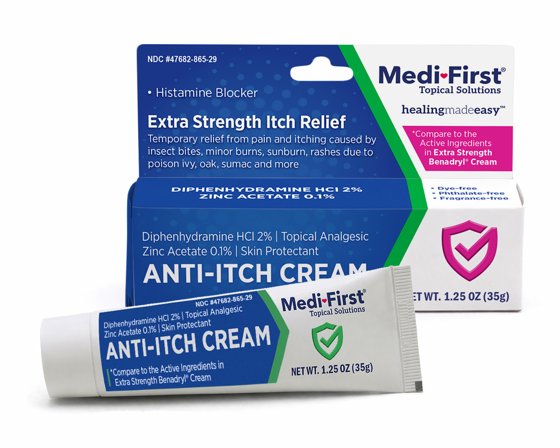
Medi-First Extra Strength Anti-Itch Cream compares to the active ingredients in Extra Strength Benadryl® Cream and is dye-free, phthalate-free, and fragrance-free, in a 1.25 oz tube.
Directions are usually to apply not more than three to four times daily. The label is for adults and children 2 years of age and older (under 2, ask a doctor). Do not use on large areas of the body or together with any other product containing diphenhydramine, even one taken by mouth, and ask a doctor before use on chicken pox or measles.
Which one, when
A quick decision guide, always subject to the label:
- Mosquito or other insect bites. Either works. If the bite is raised, red, and inflamed, hydrocortisone. If it stings as well as itches, diphenhydramine cream, which is labeled for pain too.
- Poison ivy, oak, or sumac. Both labels cover it. Hydrocortisone helps with the inflamed, itchy rash. The diphenhydramine and zinc acetate combination relieves itch and pain and helps dry weeping areas. Many households keep both. For a widespread rash, a rash on the face or genitals, or significant swelling, see a doctor rather than self-treating.
- Rash from a soap, detergent, or jewelry. Hydrocortisone. Removing the trigger is the real fix.
- Minor sunburn or a stinging scrape. Diphenhydramine cream, which is labeled for the pain as well as the itch.
- Eczema flare. Hydrocortisone, per its label. If eczema is frequent, talk with a doctor about a longer-term plan.
Things not to do
- Do not use either product in the eyes.
- Do not layer both creams on the same spot at the same time. Pick one for each area.
- Do not use hydrocortisone on a rash you suspect is fungal (see the antifungal guide). Steroids can make ringworm and athlete's foot worse.
- Do not use diphenhydramine cream on large areas of the body, and ask a doctor before using it on chicken pox or measles, as the label directs.
- Do not keep using either product past the label's time limit. If it is not better in a week, it needs a doctor, not more cream.
When itching needs a doctor
Call a doctor or seek urgent care for any of these:
- Swelling of the face, lips, tongue, or throat, or trouble breathing after a bite or sting. That is an emergency.
- Hives spreading across the body.
- A rash with fever, blisters, or pus.
- Signs of infection around a scratched bite: spreading redness, warmth, or drainage.
- A rash that does not improve after seven days of over-the-counter treatment.
Keep both in the kit
An itch cream is one of the most-reached-for items in any home first aid kit, and the two active ingredients cover different situations. A small tube of hydrocortisone 1% for inflamed rashes and a tube of extra strength diphenhydramine cream for painful bites and stings, together, handle nearly everything a normal summer throws at a family.
This is general information, not medical advice. Read and follow the Drug Facts label on the product you use, and ask a doctor or pharmacist about anything that worries you.
Products mentioned
Stock the kit
Anti-Itch & Rash Relief
Hydrocortisone 1% Anti-Itch Cream
Hydrocortisone 1%
Compare to Cortizone•10®*
1 oz · 4-pack
Anti-Itch & Rash Relief
Extra Strength Anti-Itch Cream
Diphenhydramine HCl 2% | Zinc Acetate 0.1%
Compare to Extra Strength Benadryl® Cream*
1.25 oz · 4-pack