Home › First aid guides › What Belongs in a Home First Aid Kit
First aid guide
What Belongs in a Home First Aid Kit
A practical checklist for a home first aid kit, a smaller travel version, and the topical creams that cover the everyday injuries and irritations a household actually sees. Written by the brand that has stocked workplace cabinets since its founding in 1974.
This is general information, not medical advice. Always read and follow the Drug Facts label on the product you use, and ask a doctor or pharmacist about your situation.
Medique® Products, established in 1974, has stocked workplace first aid cabinets for five decades, and one lesson from all those refills is that most kits are built wrong. They are either an empty box with three bandages and a rusty pair of scissors, or an overstuffed bag full of things nobody will ever use. A good home kit sits in between: it covers the injuries a household actually has, it is organized so the right thing is findable in seconds, and it gets checked twice a year.
Start with where it lives
Before the contents, decide on the location. The kitchen and the bathroom are where most household injuries happen, so a cabinet or drawer near one of them is the usual choice. It should be reachable by adults without a step stool and out of reach of young children. A second, smaller kit in the car and a pocket-size version in a backpack or purse cover the rest of life.
Use a container that closes securely, is easy to carry with one hand, and is labeled clearly. A plastic tackle box or a zippered pouch with compartments works better than a cardboard box.
The core checklist
Wound care
- Adhesive bandages in several sizes, including knuckle and fingertip shapes
- Sterile gauze pads (2x2 and 4x4) and a roll of gauze
- Adhesive tape
- A few larger non-stick dressings for scrapes
- Elastic bandage for sprains
- Butterfly closures or wound-closure strips
- First aid antibiotic ointment: a triple antibiotic ointment (bacitracin zinc, neomycin, and polymyxin B), plus bacitracin zinc alone for anyone in the household sensitive to neomycin
Tools
- Tweezers with a fine point, for splinters and ticks
- Small scissors
- Disposable gloves
- Instant cold packs
- A digital thermometer
- A small flashlight with working batteries
- Safety pins
Topical relief
- Hydrocortisone 1% cream for inflamed, itchy rashes and insect bites
- Extra strength anti-itch cream (diphenhydramine and zinc acetate) for the pain and itch of bites, stings, and poison ivy
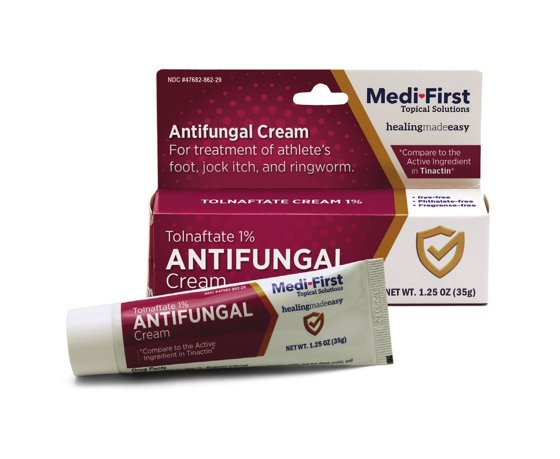
- Antifungal cream (tolnaftate, clotrimazole, or miconazole) for athlete's foot, jock itch, and ringworm
- A topical pain reliever for sore muscles and joints, such as an unscented capsaicin cream
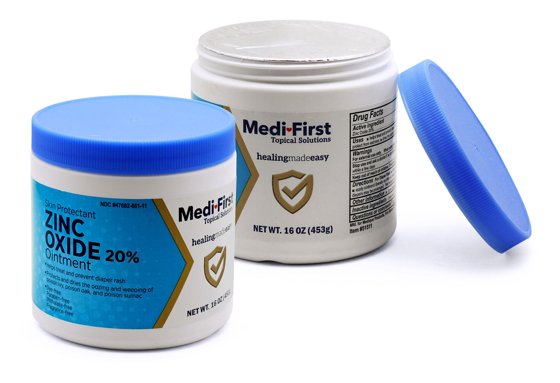
- Zinc oxide 20% ointment for chafing, diaper rash, and weeping poison ivy
Cleaning
- Saline wound wash or sterile water for rinsing debris from scrapes
- Antiseptic wipes for cleaning skin around a wound and cleaning tools
- Hand sanitizer
Medicines and information
- Any oral over-the-counter medicines your household uses, in original packaging with the Drug Facts label intact
- A list of family members' allergies, medications, and doctors' phone numbers
- Poison Control number: 1-800-222-1222
- A basic first aid reference card or booklet
Why topical creams earn their spot
Look at what a family actually treats over a year: scraped knees, kitchen cuts, mosquito bites, a poison ivy patch after a hike, athlete's foot from the pool, a sore back from moving furniture, chafing after a long walk, diaper rash. Nearly all of it is skin-level, and nearly all of it is handled by a small set of over-the-counter topical products used exactly as their Drug Facts labels direct.
The trouble is that these creams are usually bought one at a time, in a hurry, at full price, and then left in whichever room the emergency happened in. Stocking the kit deliberately, with small tubes that fit in a compartment, means the right product is where it belongs before it is needed. Medi-First® retail topicals come in 0.5 oz to 2 oz tubes (and a 16 oz zinc oxide jar) for exactly this reason, and every product's Drug Facts label describes what it is for and how to use it.
The travel kit
The home kit is too big for a suitcase. A travel version fits in a quart-size zip bag:
- A dozen adhesive bandages in mixed sizes
- Four gauze pads and a small roll of tape
- Tweezers and a few antiseptic wipes
- A 0.5 oz tube of triple antibiotic ointment
- A 0.5 oz tube of hydrocortisone 1% cream
- A 0.5 oz tube of antifungal cream, especially for beach or gym trips
- A small tube of pain-relieving cream
- Any personal medications, plus a card with allergies and emergency contacts
Keep it in carry-on luggage. Ointments and creams in tubes this size are fine under the liquids rule.
The car kit
Somewhere between the two. Add an emergency blanket, a larger roll of gauze, a bottle of water for rinsing, and a small trash bag. Heat inside a parked car shortens the life of many products, so check the car kit more often than the home kit and replace anything that has separated, discolored, or expired.
Maintenance: the twice-a-year check
Set a reminder at the spring and fall clock changes:
- Open the kit and lay everything out.
- Check expiration dates on every tube and package. Replace anything expired.
- Replace anything used since the last check.
- Look for tubes that are nearly empty, crushed, or have been left open.
- Make sure the family information card is current.
- Wipe out the container and put everything back in the same compartments.
Keep a short list of what the kit contains taped inside the lid, so that whoever grabs it can see at a glance what is available.
What a kit cannot replace
A first aid kit handles minor injuries. It does not replace a doctor, urgent care, or emergency services. Call emergency services for severe bleeding, difficulty breathing, chest pain, a suspected broken bone, a head injury with confusion or vomiting, or a serious allergic reaction. When in doubt, call.
This is general information, not medical advice. Read and follow the Drug Facts label on any product you use, and ask a doctor or pharmacist about your household's needs.
Products mentioned
Stock the kit
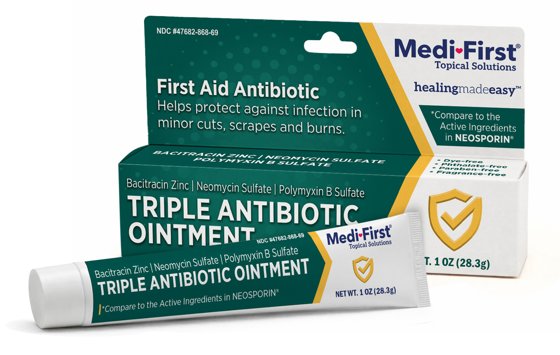
First Aid Antibiotics
Triple Antibiotic Ointment
Bacitracin Zinc | Neomycin Sulfate | Polymyxin B Sulfate
Compare to Neosporin®*
1 oz · 6-pack
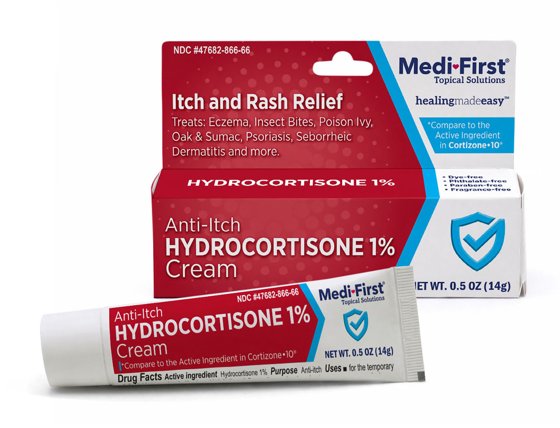
Anti-Itch & Rash Relief
Hydrocortisone 1% Anti-Itch Cream
Hydrocortisone 1%
Compare to Cortizone•10®*
1 oz · 4-pack